Defined the UX vision
Established a diverge-and-converge approach spanning discovery, definition, design and delivery.
I led the UX direction for Audi's online retail overhaul—connecting research, customer journeys, information architecture, responsive product design and performance measurement into a clearer way to explore, configure and finance a car.
Audi needed more than a collection of redesigned screens. The work required a shared customer-experience vision, a repeatable product-design process and enough evidence to align senior stakeholders, product teams and delivery partners.
I led the in-house design team through that change, translating customer and business needs into journeys, structures, prototypes and production guidance while continuing to support the existing website and online tools.
Established a diverge-and-converge approach spanning discovery, definition, design and delivery.
Kept senior stakeholders informed and involved while setting priorities for the design team.
Produced journeys, architecture, wireframes and interactive prototypes for online sales.
Linked design decisions to analytics, testing, customer satisfaction and commercial performance.
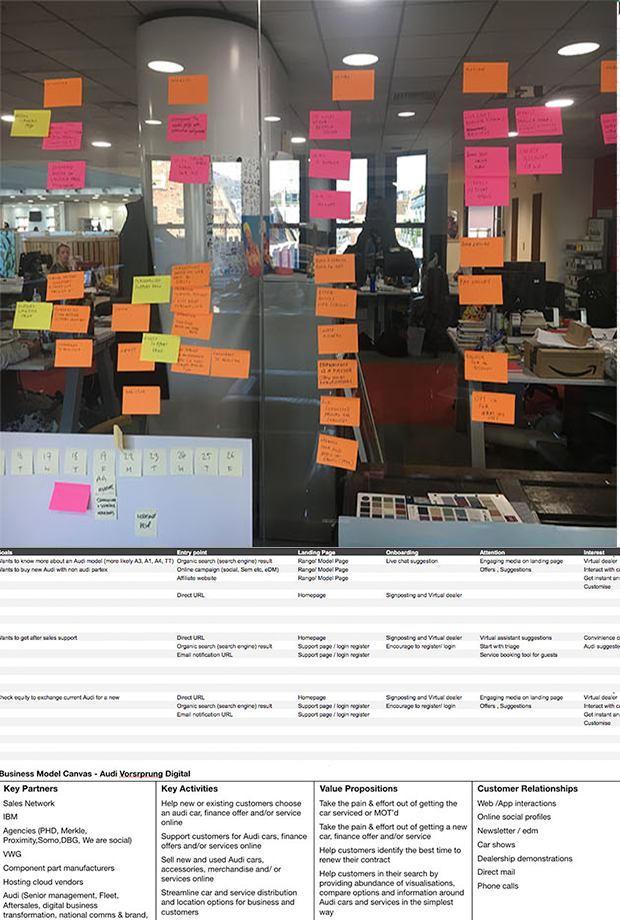
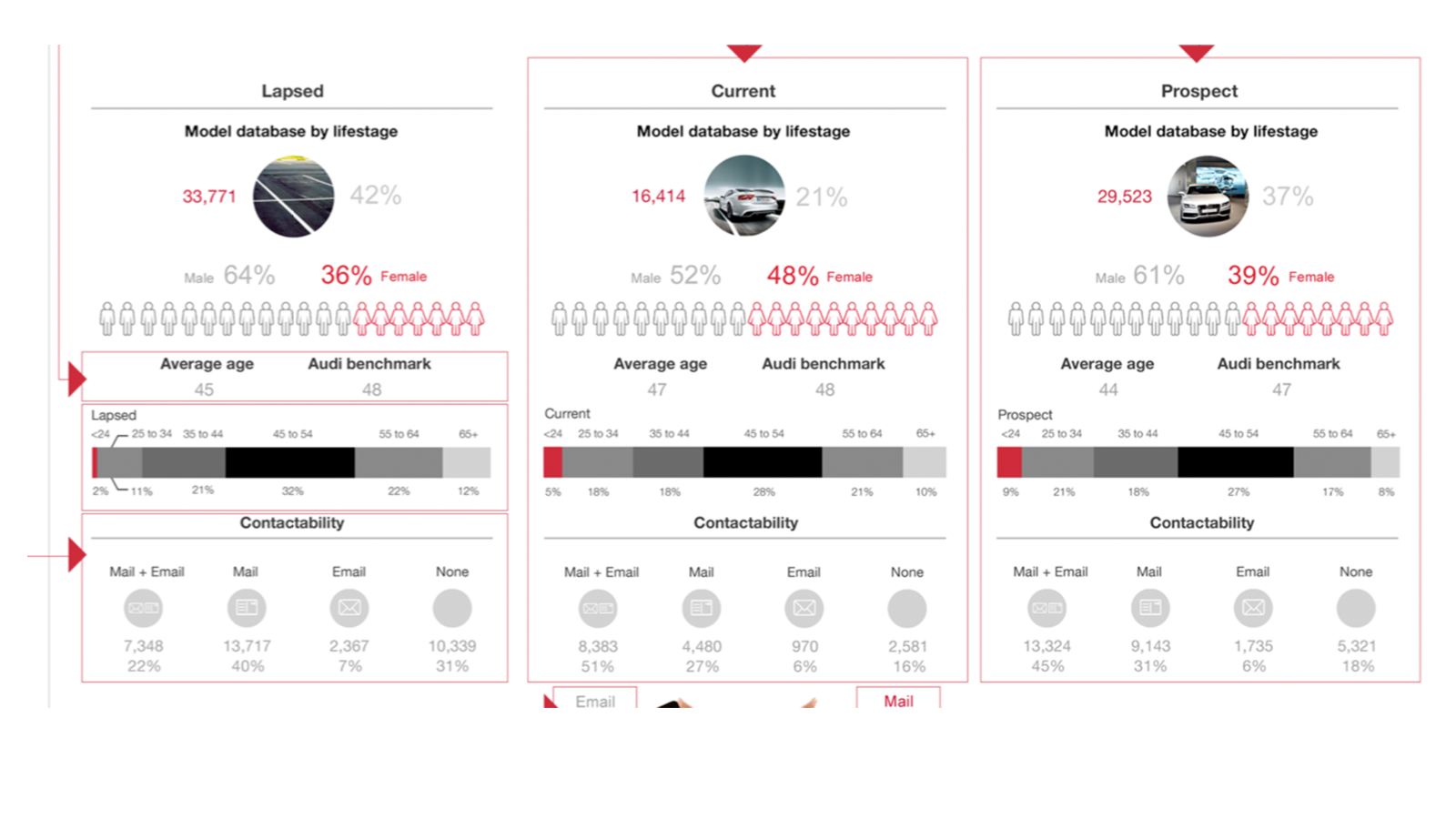
Workshops, behavioural evidence and customer modelling helped the team move beyond internal assumptions. I used the outputs to define who we were designing for, what information mattered at each stage and where the existing experience created friction.
The resulting artefacts gave design, product and business stakeholders a common language for evaluating ideas before committing to delivery.

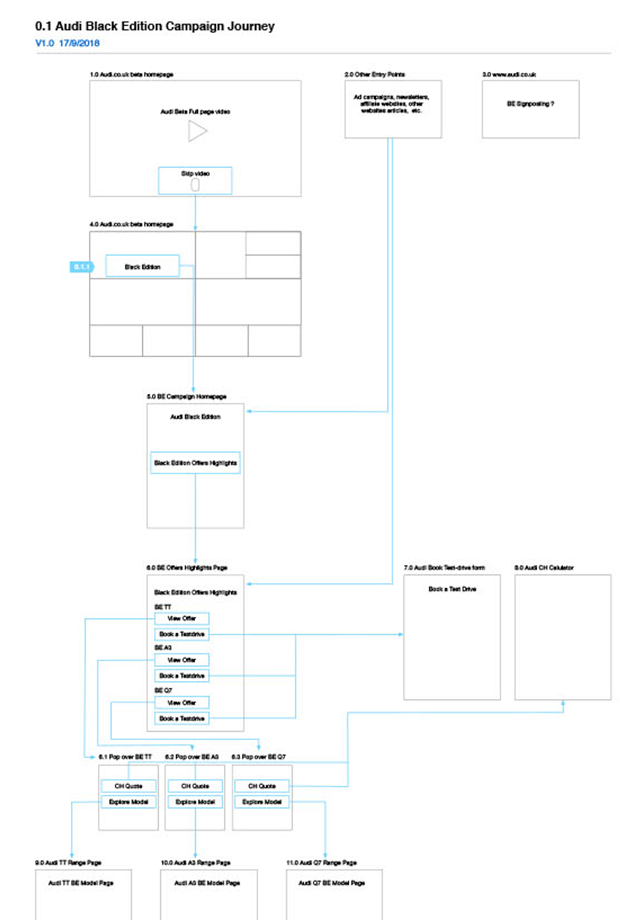

I formalised where research, synthesis, ideation, prototyping and validation belonged within the product lifecycle. This made UX activity visible to stakeholders and helped the internal team plan work, allocate effort and protect quality under tight delivery constraints.
The process supported both strategic initiatives and the continuous improvement of live digital tools.

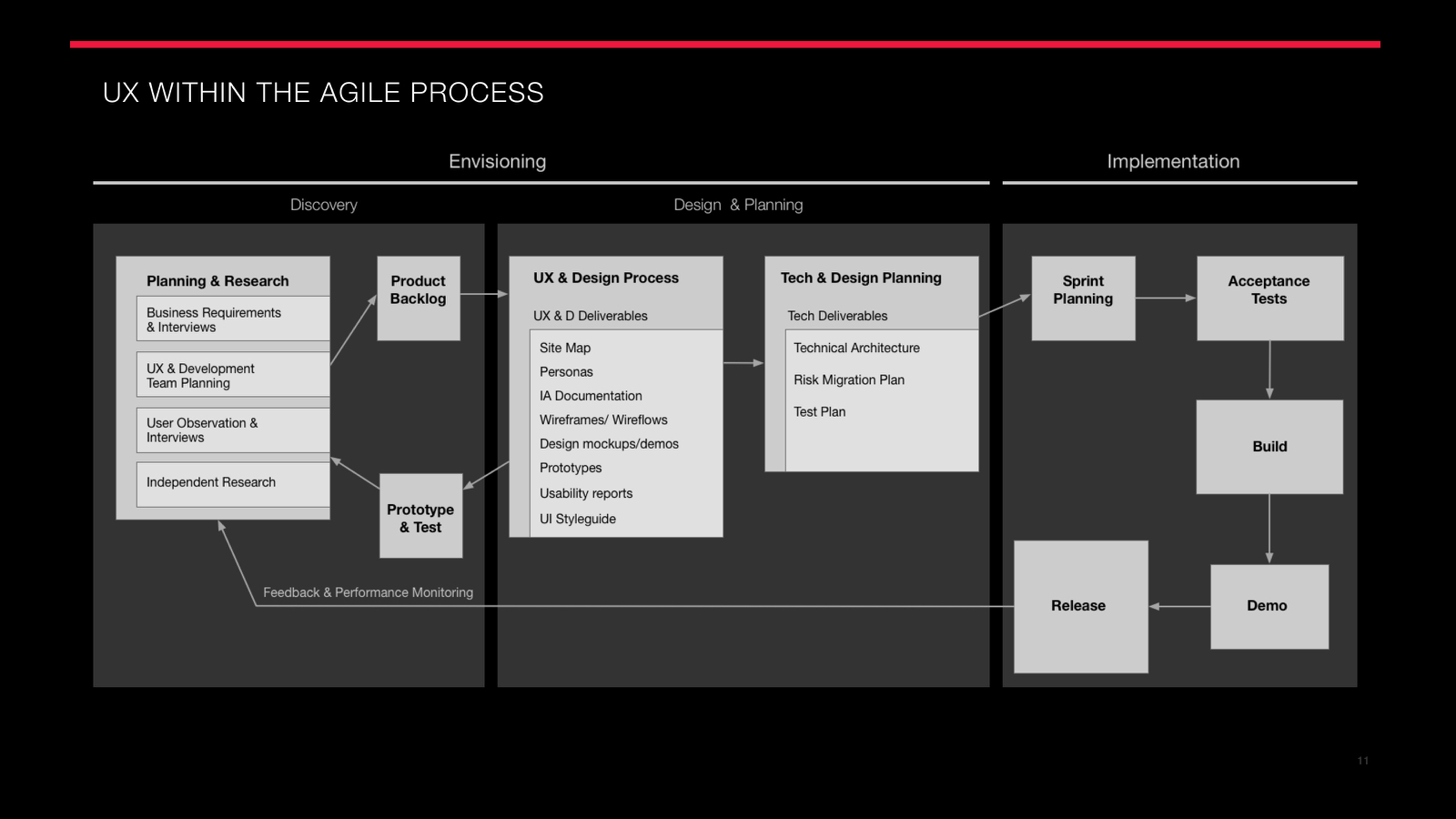
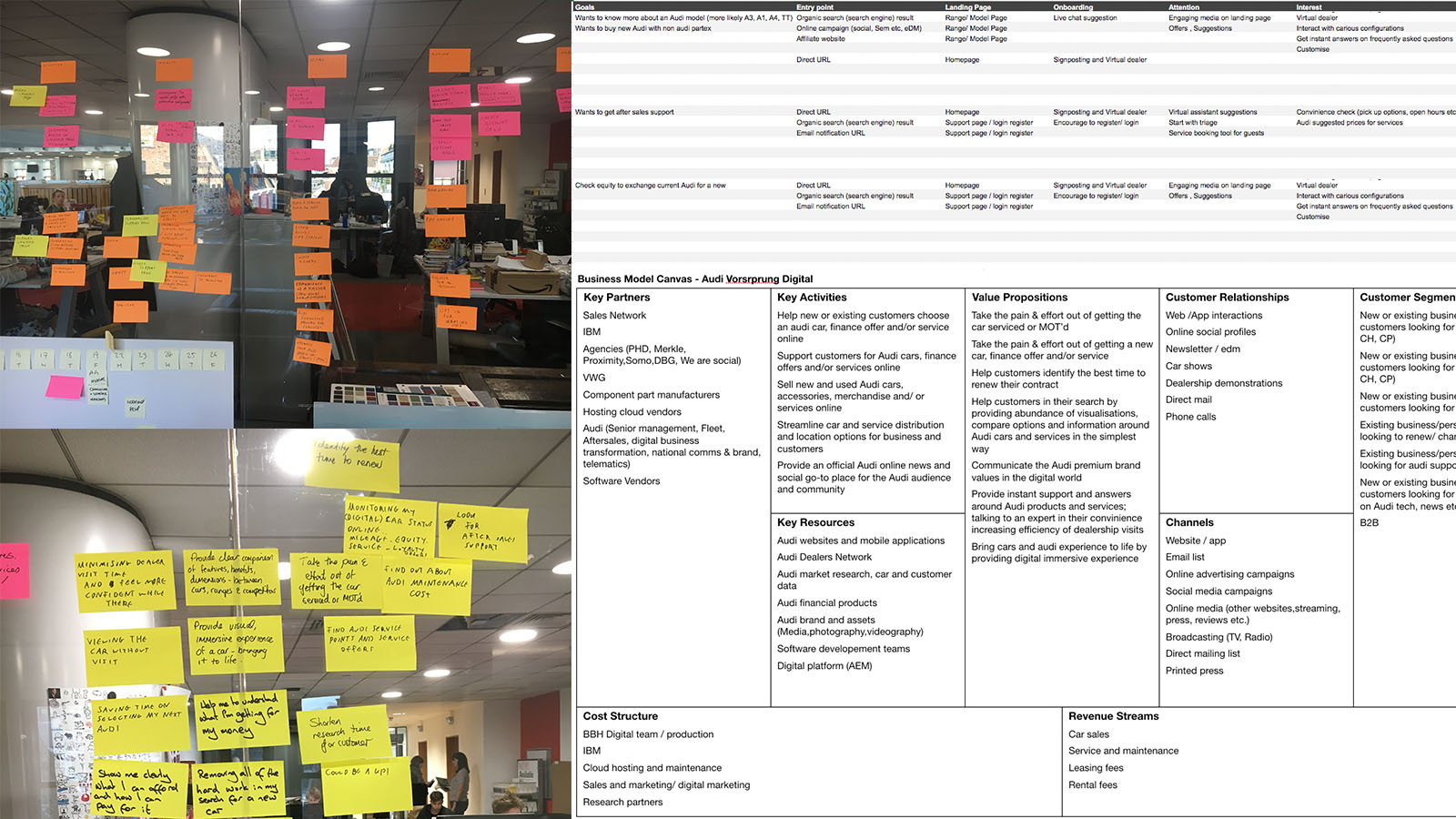
The journey mapped different customer mindsets across browsing, comparison, configuration, finance and action. It showed where information, reassurance and commercial prompts should appear without forcing every customer through the same path.
Browse by range, need, budget or campaign entry point.
Understand variants, features, availability and ownership implications.
Personalise the vehicle and finance variables around an affordable plan.
Save, enquire, arrange a test drive or continue towards purchase.

The design work connected campaign journeys, model selection, configuration and finance into responsive flows. Detailed wireframes helped teams resolve content, interaction and system dependencies before visual design and build.
The final direction kept Audi's premium character while making the buying tools more purposeful, transparent and easier to use across devices.

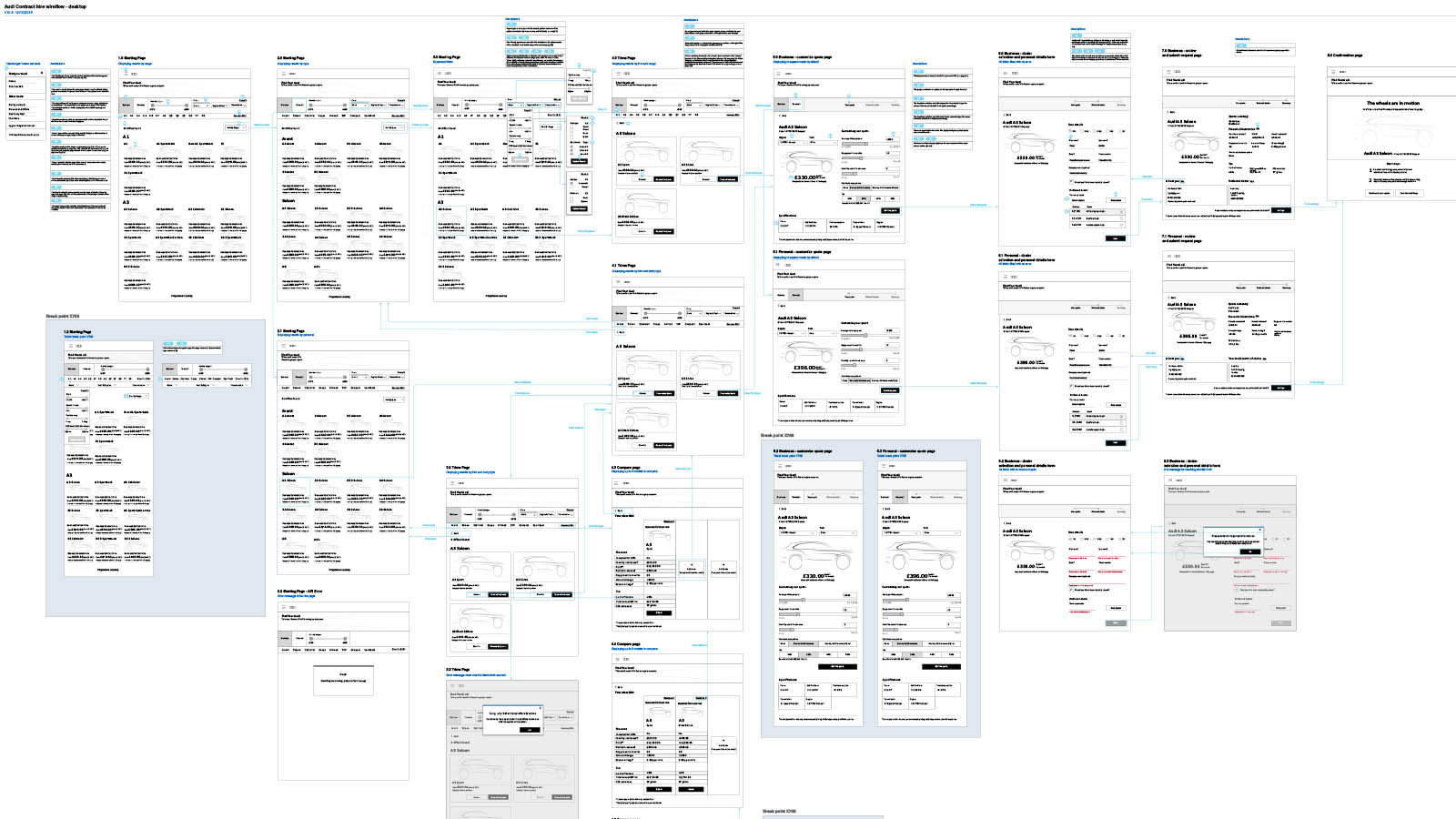
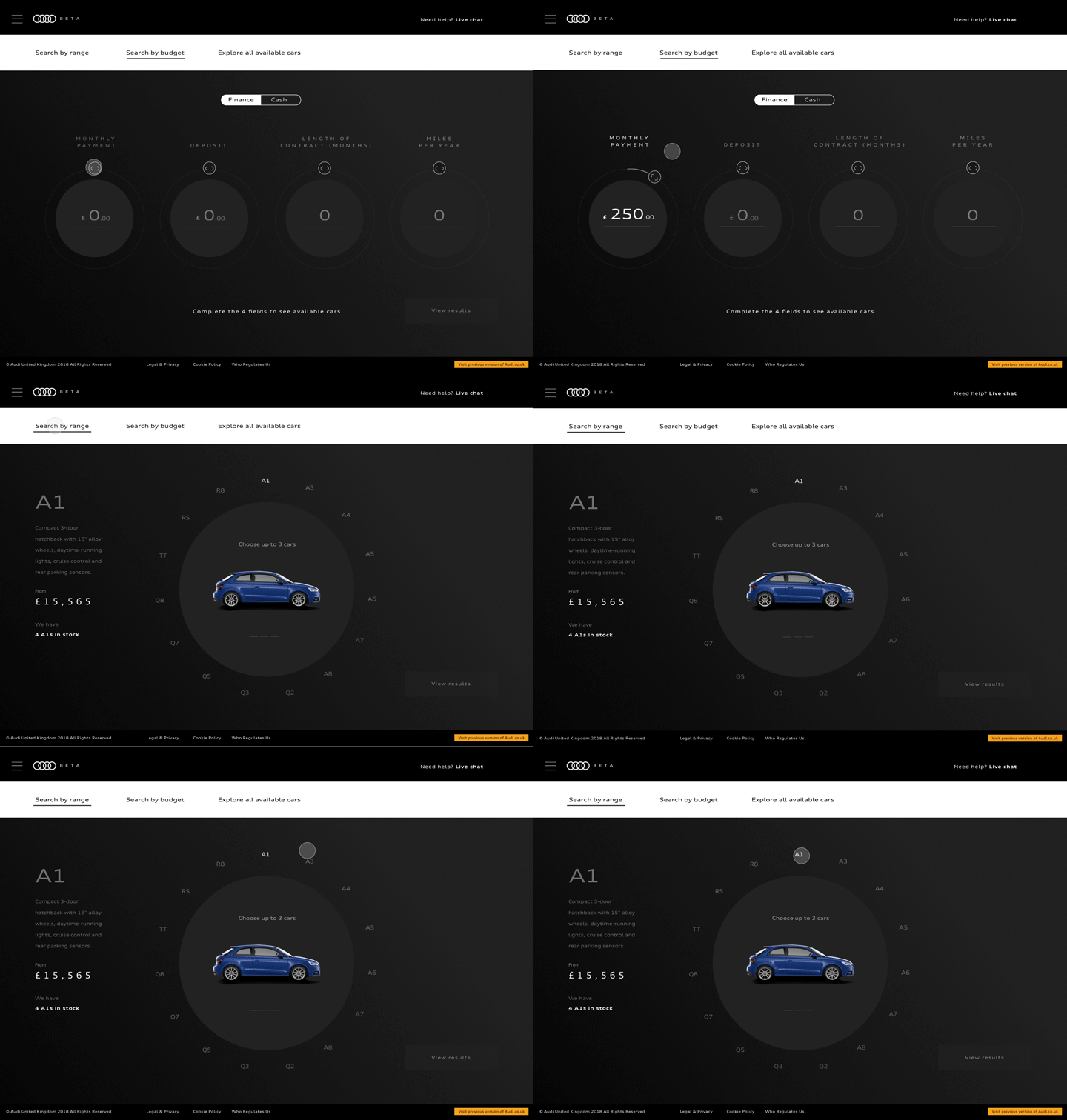
The final concepts translated the journey into vehicle discovery, configuration and personalised finance experiences, then demonstrated interaction and responsive behaviour through a working prototype.

I worked with research and analytics colleagues to connect usability studies, performance monitoring and A/B testing to design decisions. The goal was to make iteration evidence-led and give stakeholders a clearer view of UX value.
I also documented the approach so the internal team could continue using it across campaigns, model launches and future retail work.
Allocated work, set priorities and coached designers across concurrent product and campaign activity.
Used workshops, prototypes and evidence to keep senior decision-makers involved without slowing delivery.
Documented UX practice, best-practice guidance and measurement so the approach could be sustained internally.
The work improved both the customer-facing experience and the organisation's ability to deliver it—bringing structure, evidence and consistent UX thinking into a commercially important transformation.
Impact is described qualitatively because exact commercial and research figures are confidential.
 Lead UX Designer • Responsive Website • User Centred Process
Leading the in-house design team through and delivering the new Audi UX Vision guidelines while streamlining UXD process and boosting delivery.
Selected examples across enterprise platforms, streaming experiences, UX strategy and digital transformation.